Mingyang Liu (劉明洋)
pronounced as: ming yahng lyoh
Welcome to my homepage! I am a Ph.D. candidate in Accounting at Frankfurt School of Finance & Management. My research explores how non-financial factors affect firm behavior. I examine, from a political economy perspective, how the socioeconomic environment in which firms operate shapes their moral and political values, and I develop novel measures that capture these values. Along this line, I study questions such as which social issues firms become exposed to, the economic reasons for the firm to form distinct moral images, how firms engage in costly green instruments to signal their value preferences, and how firms construct economic narratives that encode their beliefs.
Before my Ph.D., I completed a Bachelor of Commerce (Accounting) and a Master of Marketing Communications at the University of Melbourne. I then worked as an auditor at PwC Shanghai, where I provided annual audit and IPO audit services to firms in the TMT (technology, media, and telecom) sector.
Outside academia, I read and watch widely, from classics and fantasy novels to Korean drama and reality shows. My favorite writers are Kawabata Yasunari and Sei Shonagon. When I am with friends, I enjoy playing strategic board games and open-world video games. I am also developing a new hobby of cooking and baking!
Research Interests
Political Economy of Accounting
Corporate Values
Text-as-Data and LLM
ESG
Working Papers
01
with Zacharias Sautner, Laurence van Lent, and Ruishen Zhang
Presentations: CICF, HKU*, LSE*, 4 Universities Conference, EAA Annual Congress, TRR Annual Conference, Frankfurt School
Abstract
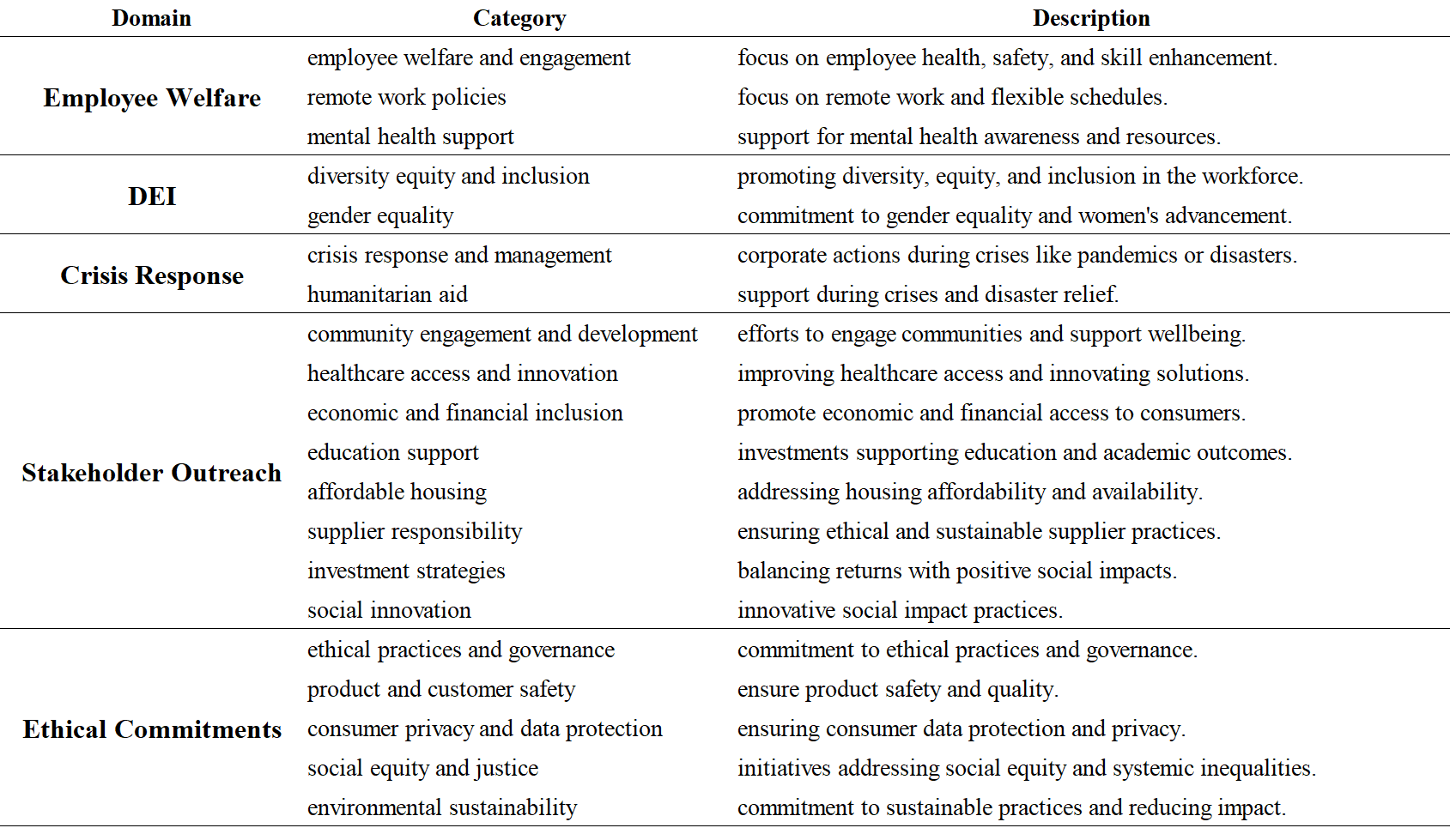
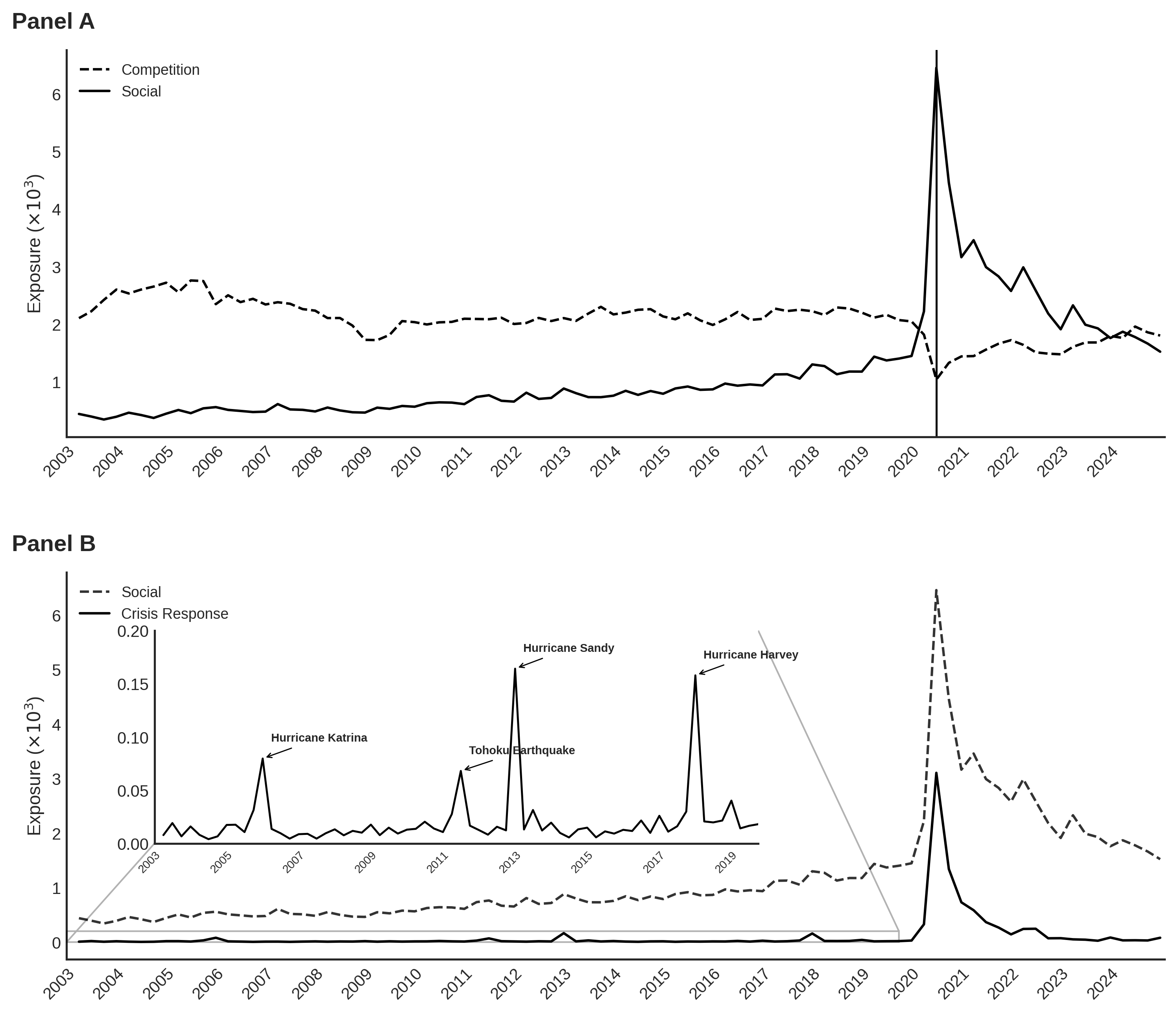
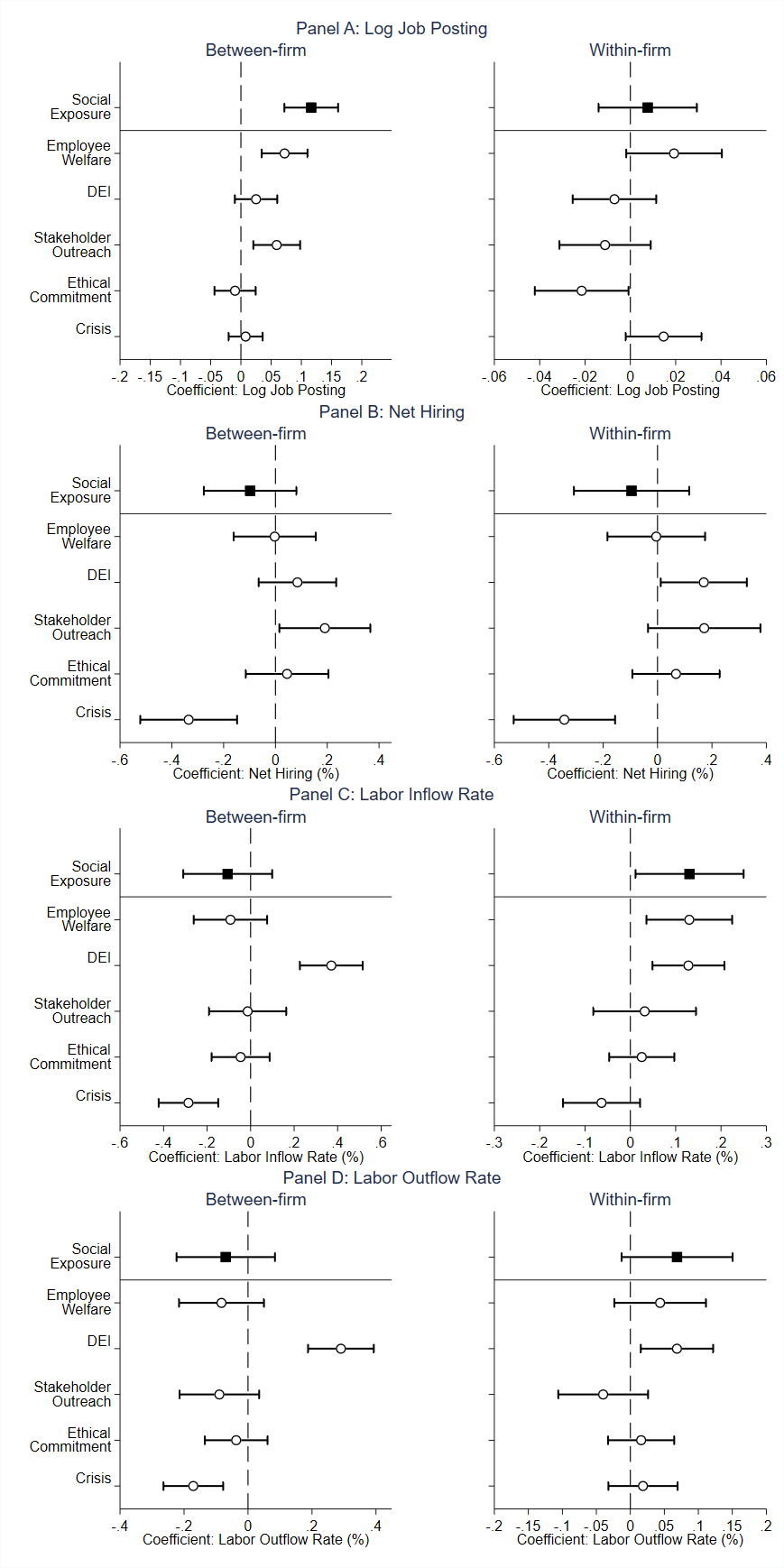
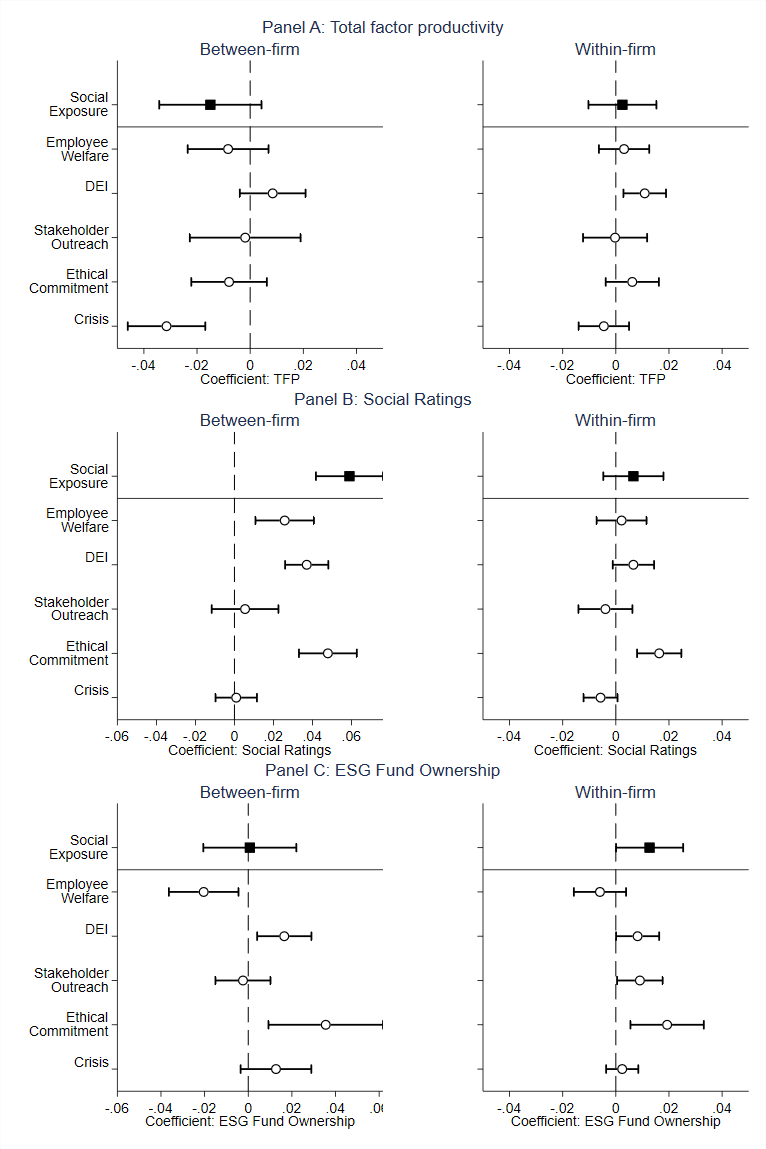
We develop a method to measure firms' exposures to social issues from earningscall transcripts. The method applies large language models and decomposes social exposure into five domains: Employee Welfare, DEI, Stakeholder Outreach, Ethical Commitments, and Crisis Response. The measures cover over 15,000 firms across 93 countries from 2003 to 2024. The five domains exhibit distinct, sometimes opposing, associations with labor outcomes, productivity, and ESG ratings. Aggregating domains of differing sign attenuates estimated effects, consistent with the weak findings reported for composite social scores. Domains correlate with labor-market outcomes and productivity in different directions; the aggregate averages these correlations toward zero. Exploiting the Dobbs decision, which tightened abortion regulation, as a labor-supply shock, we find that firms with higher pre-Dobbs DEI exposure experienced a lower worker outflow than non-exposed firms in the same state and month.
02
From Cheap Talk to Credible Signal: Accounting Measurement and the Use of Sustainability-Linked Loan
solo-authored
Presentations: EAA Annual Congress, Frankfurt School
Abstract
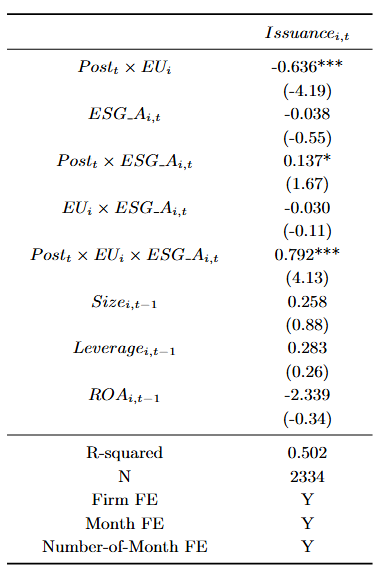
Sustainability-linked loans (SLLs) are loans whose interest margins are linked to borrowers' ESG performance targets. This paper examines the real effects of the IFRS 9 amendment, which makes SLLs more likely to be measured at fair value, thereby raising earnings volatility for issuing banks. I test the hypothesis that these additional volatility costs can serve as costly signals that discourage brown banks while encourage green banks to use SLLs to signal their type. Using a triple-difference design that compares European IFRS banks to U.S. GAAP banks before and after the proposed IFRS 9 Amendment, and across banks with high versus low ESG ratings, I find that treated green European banks increase their SLL issuance by about 22% relative to U.S. banks, whereas brown European banks reduce their SLL issuance by roughly 56%. In the subsample cross-sectional analysis, a positive and statistically significant association between banks' ESG ratings and SLL issuance appears only for European banks in the post-amendment period, and not in the pre-period or among U.S. banks. Taken together, the results support that the accounting-induced costs of using SLLs discipline greenwashing and enhance the role of SLLs as a credible signal of banks' ESG type.
*: presentation by a co-author
Work in Progress
04
Narrative Commonality as Systematic Risk
solo-authored
Abstract
Building on the idea that the economic narratives that are more common and shared by more firms are more likely to be systematic and the ones discussed by certain firms are idiosyncratic, I developed a production-based asset pricing model that show cross-sectional weighted narrative commonality is proportional to the priced covariance. Using firms' 10K discussion, I apply LLM enabled method to capture the economic narrative discussed by the firm and measure narrative commonality as the shares of firms sharing the same narrative to validate the model.
05
Firm-level Political Polarization and Moral Foundations
solo authored
Abstract
Using moral foundations theory, I measure firms moral foundations by capturing the extent the which they discuss the 4 underlying moral foundations in their earnings calls. I identify that the expressed moral foundations in the script presentation section change over time while the ones in the Q&A section are stable, suggesting that firms actively manage their moral images. I analyze how this moral image affect corporate outcomes like supply chain relationship, and political engagement.